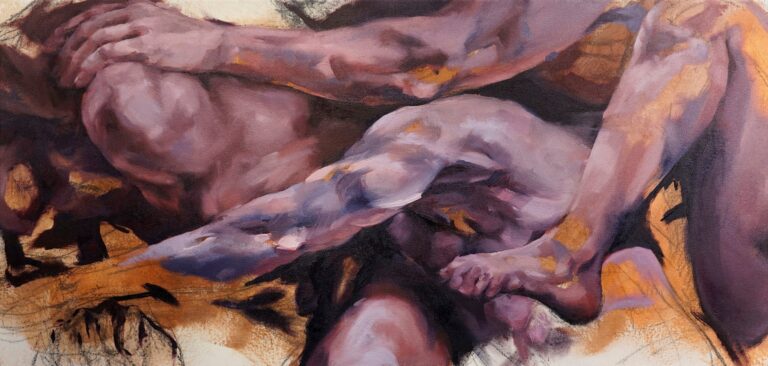
An art collection can be one of the most personal records a family keeps. Unlike most possessions, works of art gather meaning as the years pass, marking the moments and choices that shaped a household. Building a collection with your family in mind changes how you acquire, how you live with what you own, and what you eventually pass on. It turns collecting from a private pleasure into a shared and evolving story.
Collect Around Shared Life, Not Just Taste
The most resonant family collections tend to follow the arc of a life together. A work acquired to mark a move, a milestone, or a particular year becomes tied to memory in a way that outlasts any decorating scheme. Years later, the piece recalls not only its own qualities but the moment it entered your home.
This does not mean every purchase needs an occasion. It means choosing works you expect to live with for a long time, pieces sturdy enough in meaning to accompany a changing household rather than suit a single phase of it.

There is a practical filter hidden in that idea. Taste narrows and sharpens with age, but the works that survive a decade of living tend to be the ones that were slightly ahead of the buyer — a painting you did not fully understand at first, and kept returning to. Works chosen purely because they matched a room are usually the first to be replaced when the room changes. Works chosen because they held a question tend to stay.
Involve the Next Generation
Children who grow up around original art learn to look, to question, and to form opinions. Inviting them into the conversation, asking what they notice, letting them help choose where a work hangs, builds a genuine relationship with art that no museum trip alone can teach.
Over time, some families find that younger members gravitate toward particular pieces. Those attachments can guide how a collection is eventually shared or divided, and they ensure that works pass on to people who actually care for them.
What makes this work is treating the opinion as real. A child who says a painting looks angry has made an observation about color temperature and mark-making, and taking it seriously is more instructive than any label text. Sculpture is especially good at this, because it is physically legible in a way that flat work is not — you can walk around it, see how it was made, register its weight. Johanna El Zelah’s 100 pájaros volando, a hand-modeled ceramic at 20 × 22 × 20 cm and 2.4 kg, wears its process on its surface: the modeling by hand, the engobes and enamels shifting between matte and sheen as the light moves. Objects like this invite the kind of close looking that turns into a habit. The full sculptures selection is worth browsing with that in mind.
Think About Continuity
A collection built with family in mind is also a collection built to endure. Keep clear records of what you own, where each piece came from, and what it has meant. This documentation preserves both the value and the story, and it makes eventual gifts or inheritances far easier to navigate.
Concretely, that means keeping the certificate of authenticity, the original invoice, any gallery or artist correspondence, and a good photograph of the work as it was received. Note the dimensions, medium, year, and edition details. This is the material that constitutes provenance, and it is almost impossible to reconstruct twenty years later. A collection with clean paperwork is easier to insure, easier to lend, easier to sell if that day comes, and — most relevant here — far easier for the next person to take responsibility for without feeling they have inherited a mystery.
Consider durability in a literal sense too. Well-made original works, properly cared for, can pass through several generations. Choosing quality over quantity means what you leave behind is worth keeping.
Medium Matters More Than People Expect
Different materials age differently, and a collection meant to travel through decades should account for that. Oil on canvas is durable and forgiving, but it dislikes rapid swings in humidity and direct sun. Works on paper and photographs are more sensitive to light and need proper mounting and, where appropriate, UV protection. Ceramic and other three-dimensional work is stable but breakable, which is a placement question more than a conservation one.
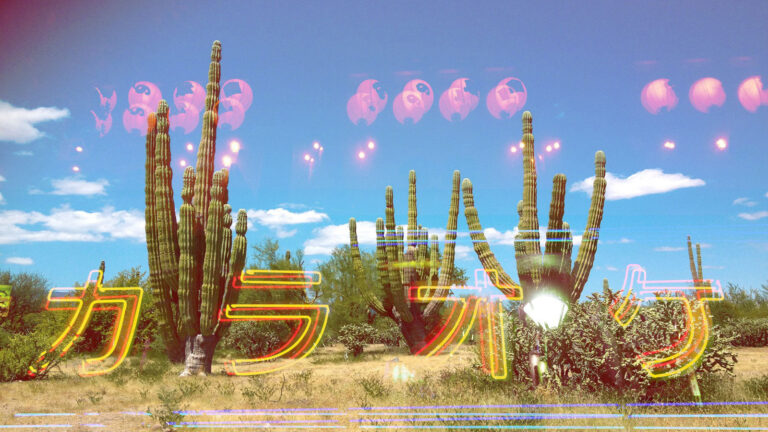
Presentation choices matter as well. Taeko Nomiya’s photographs — including Kyokai Iglesia, printed on Hahnemühle Fine Art Pearl 285 gsm in an edition of 6 per size and signed with the artist’s hanko seal — ship framed in a wooden matte-white frame with no glass, a decision that removes reflection and lets the surface read directly. That kind of choice affects both how a work lives in a room and what caring for it will require. Ask about it before you buy rather than after, and browse the Taeko Nomiya collection to see how consistently an artist treats these details.
Value, Honestly Framed
It is worth being clear-eyed here. Art bought at emerging-artist prices may appreciate, and some of it does substantially, but no one can promise that outcome and anyone who does should be treated with suspicion. The reliable return on a family collection is use: decades of looking, of conversation, of a house that feels like it belongs to specific people. Financial upside, when it arrives, is a bonus rather than the thesis.
The practical implication is that you should buy at a price you would be content with even if the work never changed hands — and then buy the best example you can at that level. A strong work by an artist early in their career generally outlasts a weak work by a better-known one, both aesthetically and in resale terms. Consistency of practice is the signal worth reading: an artist who has developed a coherent body of work over years is making a different kind of bet than one chasing whatever is currently visible.
A family collection is never finished; it grows as your family does. Begin with works you would be glad to see your children live with someday, whether you start by choosing to explore the paintings or to bring home one of the sculptures. Spend some time with the artists we represent to see whose practice you keep returning to, and if a particular work holds your attention, get in touch — we are happy to talk through dimensions, condition, framing, and shipping before you commit. What you gather now becomes part of the story your family tells later.