Provenance is the documented history of a work of art: who made it, who has owned it and where it has been. It matters because it is the evidence behind a certificate, a price and any future sale. For a new work bought from the gallery that represents the artist, the record starts with your invoice and certificate, so the job is to keep it complete from day one.
Key takeaways
- Provenance is the documented history of a work’s ownership and origin, which is how our certificate guide defines it.
- Art of NOMA says provenance is documented for each piece, that most works come directly from the artist and are new to the market, and that a prior history is stated on the work’s page.
- Every work ships with a certificate of authenticity signed by the artist; your invoice and that certificate are the first two documents in your file.
- The Art Loss Register lists 700,000 items on its database and says it runs 450,000 searches a year; experts use it to check provenance before they buy or handle items.
- The Getty Provenance Index holds over 12 million open-access resources, including Knoedler dealer records from New York for 1872 to 1970; it helps with historic works, not with new ones.
- For an edition, ask for the edition number, the total size of the edition and whether artist’s proofs exist outside the numbered run.
- A seven-item file (invoice, certificate, front photograph, reverse and signature photograph, specification, exhibition notes, dated condition note) costs nothing and ages well.
Verified 10 November 2026 against the Art of NOMA FAQ, the certificate guide, the works page and the page of one sculpture, the Art Loss Register home page and the Getty Provenance Index.

What does provenance mean for a new work?
The word comes from the art market, where works change hands for decades. In the guide on what a certificate of authenticity means for collectors, we define provenance as the documented history of an artwork’s ownership and origin. Each link in that history is a paper or a photograph: an invoice, a certificate, a catalogue entry, a letter.
A work by an emerging artist usually has a short history, and that is an advantage. The Art of NOMA FAQ says most works come to the gallery directly from the artist and are new to the market, and that where a piece has a prior history, the gallery says so on its page. If you buy such a work, you are the first owner, and the first line of the record is written when you pay.
That first line decides how easy the rest is to write. A buyer who keeps the paperwork can answer, years later, which series the work belongs to, what year it was made and where it has hung. A buyer who did not has to reconstruct the answer from a bank statement and a memory, which is slower and rarely complete.

Why does a gap in the record matter?
A gap is a stretch of time or a change of owner that nobody can explain. In a new work there are none to explain, since one invoice links the artist’s gallery to you. In a resale, each gap is a question the next buyer will ask, and a work with several unanswered ones is harder to place.
Two more everyday problems come from thin records. The first is identity. Artists rename pieces, series get renumbered and studios reorganise their files, so a work can become hard to match to its own description. A photograph of the work, its reverse and its signature, kept next to the certificate, settles that in two minutes.
The second is material. Oil on canvas, clay and paper age differently and want different care, so a record that names the medium and support exactly gives a conservator or a buyer something specific to work from. Our guide to how to care for original paintings at home shows why the detail is worth writing down.
Which public records can you check yourself?
Before you buy a work with earlier owners, you can check it against public sources. The Art Loss Register describes itself as the world’s largest private database of stolen art. Its home page lists 700,000 items on its database and 450,000 searches conducted annually, and says experts around the world use its services to check the provenance of items before they buy or handle them. For a resale, asking the seller whether the work has been checked there is a fair question.
The Getty Provenance Index serves a different purpose. It offers open access to over 12 million digitized resources that trace the movements of art, among them dealer stock books of Goupil & Cie. (Paris, 1846 to 1919) and M. Knoedler & Co. (New York, 1872 to 1970), sales catalogues from 1650 to 1945 and archival inventories from 1520 to 1880. It is a research tool for historic works. A painting finished this year will not be in it.
Neither source replaces a straight answer from the seller. They are checks you can run once you have the work’s title, the artist and the names of its previous owners, which is why those details are worth asking for.
If a resale does turn up, put the request in writing. Ask the seller for the title, the year, the artist’s name, the names of earlier owners or the gallery that held the work, any invoice that shows how it was acquired, and a note of where it has been exhibited. A seller with a clean history sends these in a single message, and a seller who hesitates has told you something useful before you have paid anything.
The same habit protects you as a seller later. If you ever resell, the next buyer will ask you the questions above, and a folder that already holds the answers turns a long exchange of emails into one attachment.
What should a provenance file contain?
Keep one folder per work, on paper or on a drive. This is our advice rather than a rule from any registry, and it takes an afternoon to set up. Seven items cover most needs:
- The invoice from the gallery.
- The certificate of authenticity.
- A high-resolution photograph of the front.
- A photograph of the reverse and of the signature.
- The medium, support and dimensions exactly as the gallery states them.
- Any exhibition or publication in which the work appears.
- A dated condition note, repeated whenever the work is moved or lent.
The certificate deserves a second look when it arrives. A useful one names the artist, the title, the year, the medium and the dimensions, and carries a signature. The page on what to ask before buying your first original painting lists the questions to send before you pay, including who issued the certificate and whether that person can be reached.
Keep a digital copy of every document in a second place. If the original certificate is lost, the first call is to the gallery that sold the work; it holds the sale record.
How does an edition change the paperwork?
A unique work exists once. An edition exists in a stated number of copies, and the paperwork has to say which copy you hold. The Art of NOMA FAQ says limited edition prints are always identified as such in the product description, and that both originals and editions ship with a certificate of authenticity.
For an edition, ask for four things in writing: the edition number, the total size of the edition, the printing method and whether artist’s proofs exist outside the numbered run. Without them an edition is hard to describe later, however good the image is. Our guide to prints, editions and originals sets out how the three differ.
The difference reaches the price. On 10 November 2026 the works page shows 208 works, and the lowest price on it is MX$2,339. Original art by budget shows what each band of the catalogue holds, and in any band the record you keep is what separates a purchase from a receipt.
What does Art of NOMA put in writing?
The gallery’s FAQ states three things you can hold it to. Every work ships with a certificate of authenticity, signed by the artist. The gallery works directly with the artists it represents rather than through resellers. And provenance is documented for each piece.
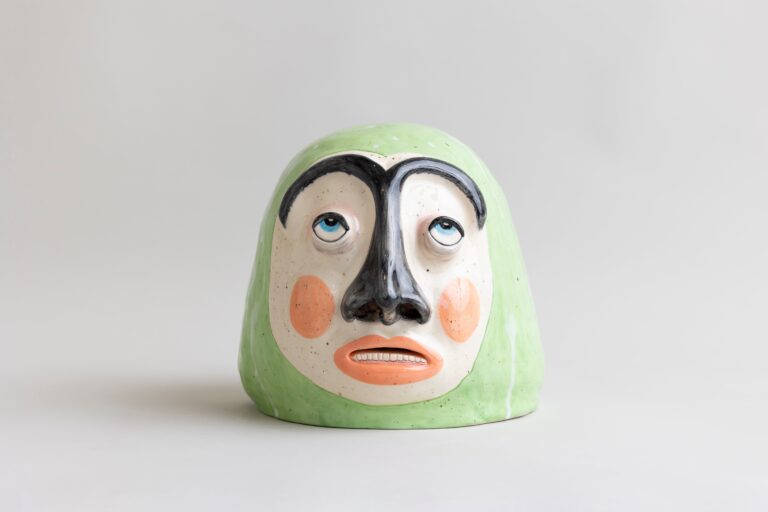
The page of 100 pájaros volando by Johanna El Zelah shows what a work page prints before you ask. It states the medium (low-temperature ceramic, engobes and enamels, hand-modeled), the year (2026), the size (20 × 22 × 20 cm), the weight (2.4 kg), that it is a unique work and that a certificate of authenticity is included. It lists the price, and the status reads Available.
If something you need is missing from a page, write to hello@artofnoma.com, or use the complimentary art advisory. When you are ready to look, start with the works page, meet the artists, or read how to buy original art online. Then start your folder with the invoice.
Frequently Asked Questions
What is provenance in art?
Provenance is the documented history of an artwork’s ownership and origin: who made it, who has owned it and where it has been, supported by documents such as invoices, certificates and exhibition records.
Does provenance matter for a work by an emerging artist?
Yes. For a new work bought from the artist’s gallery, you are the first owner, so the record starts with your invoice and certificate. Keeping it complete from the beginning makes every later question easier to answer.
What documents should I keep with an original artwork?
Keep the invoice, the certificate of authenticity, a photograph of the front, a photograph of the reverse and signature, the exact medium and dimensions, any exhibition or publication notes and a dated condition note.
What if I lose the certificate of authenticity?
Contact the gallery that sold you the work first. It holds the sale record, and a recent primary-market purchase is the easiest case to document again.
Sources
- Art Loss Register: the world’s largest private database of stolen art
- Provenance Index, Getty Tools & Databases
- Frequently Asked Questions, Art of NOMA
- What a certificate of authenticity means for collectors, Art of NOMA
- 100 pájaros volando by Johanna El Zelah, Art of NOMA
- Original works by emerging artists, with prices, Art of NOMA