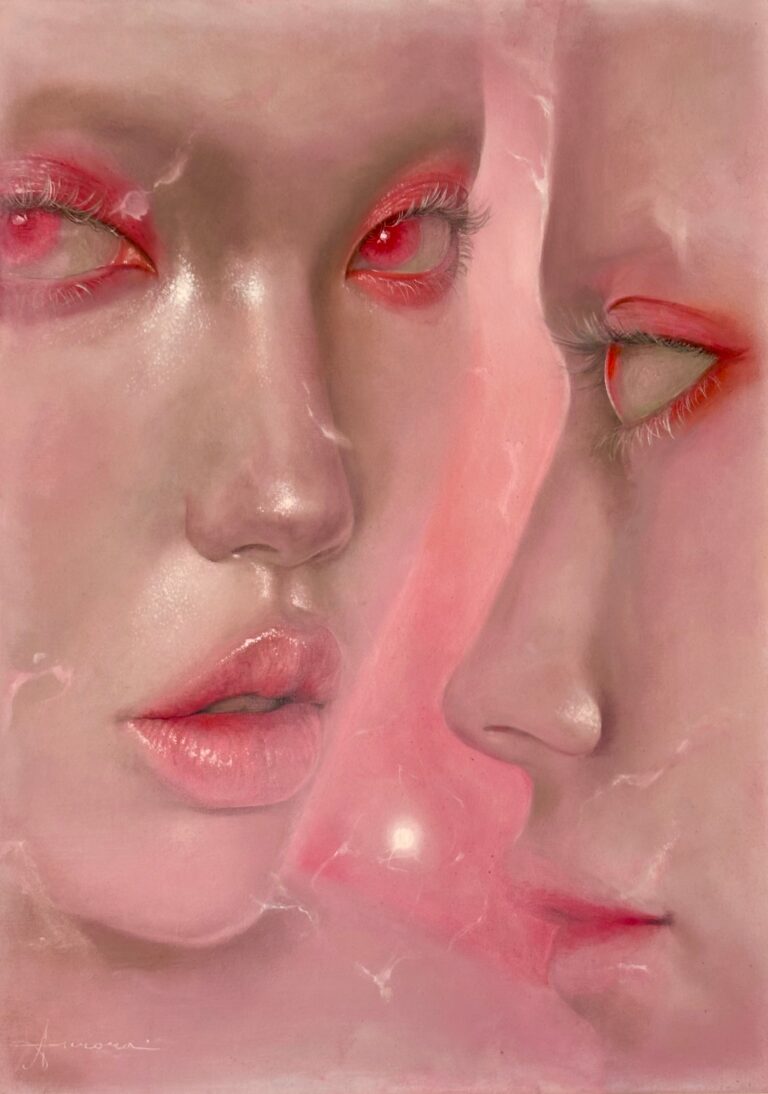
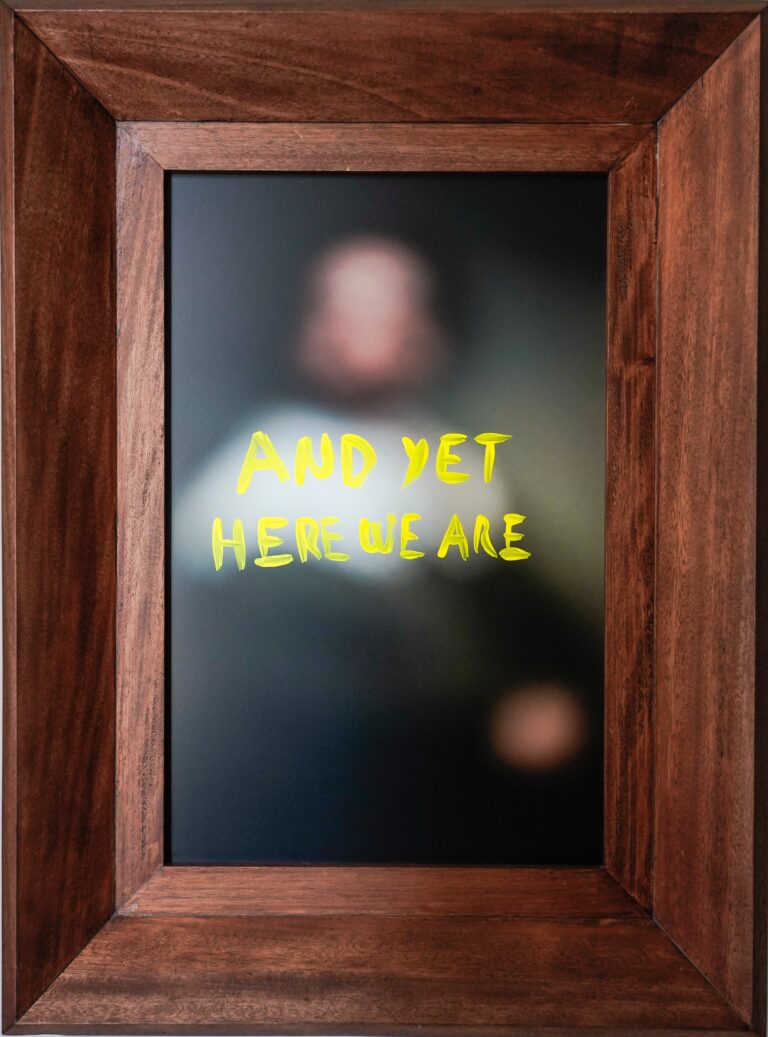
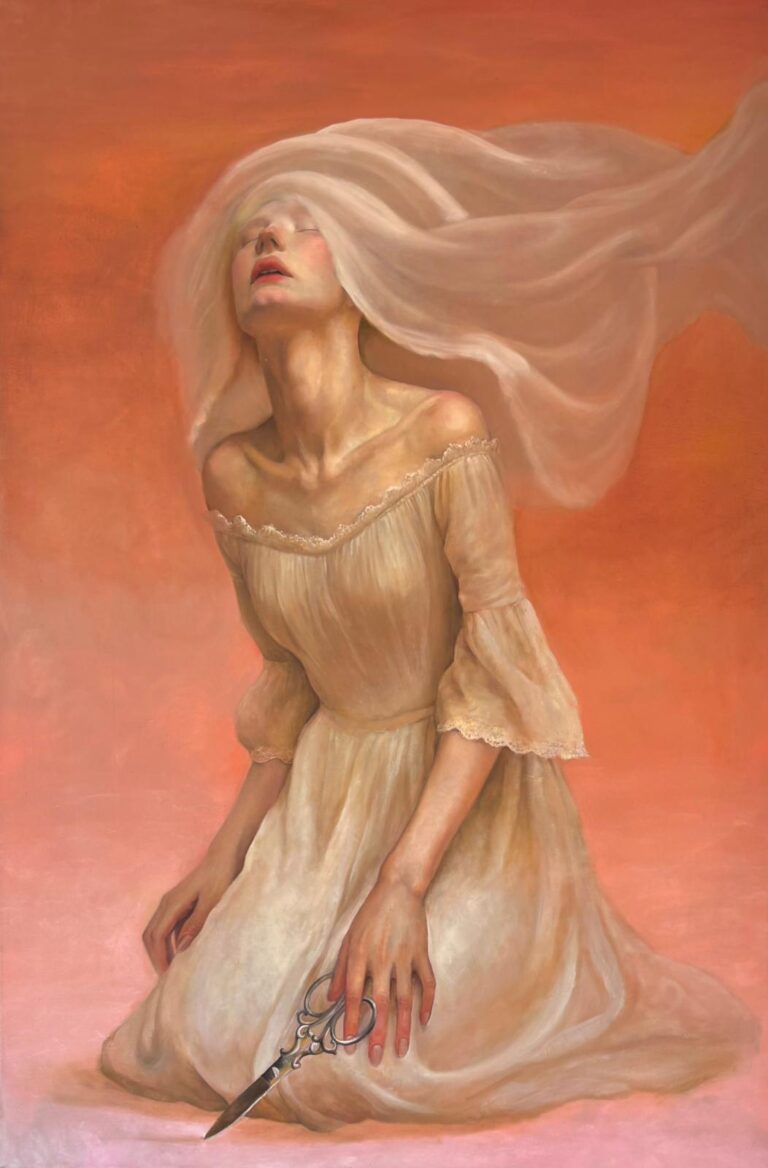
To spot an emerging artist early, work through eight checks in order: look at the work, look for a pattern, read the artist’s own record, check who shows the artist, watch the direction over time, read the price, ask for the paperwork, and separate claims from facts. None of it needs insider access, and none of it predicts a career. This is a method for looking carefully, not a forecast. The word itself is defined in What Is Emerging Art?; this guide is the how.
Key takeaways
- The method has eight checks. Each one pairs something to look at with a source to check it against.
- No institution defines “emerging”. The Kansas City Artists Coalition describes it by career stage: limited exhibition experience at major galleries or institutions, fewer years in the art market, and limited sales and recognition.
- A gallery’s own artist page can list a birthplace and year, training, exhibitions and collections. Galería Karen Huber’s page for Andrew Holmquist lists all of these.
- At Art of NOMA, an artist page shows the artist’s city, birth year and representation, and every work page shows its price in pesos.
- Our editorial standards say dates and hours are checked against the venue and that work we sell is labelled as work in which we have a commercial interest.
- A checklist helps you look. It does not tell you what a work will be worth later.

Why use a checklist to spot emerging artists?
Because nobody awards the title. An artist cannot apply to be “emerging”, and no register lists who is, so you have to build your own picture from evidence. The Kansas City Artists Coalition, which publishes a plain account of the term, says an emerging artist is typically in the early stages of a career, perhaps a recent graduate or someone with recognition in local exhibitions. It lists the usual traits: limited exhibition experience at major galleries or institutions, fewer years in the art market, a style still developing, and limited sales and recognition. The same article adds that the move from emerging to established is gradual, with no fixed timeline, and that the terms do not necessarily reflect the quality of the work.

That description tells you what to look for: a short but real record, and a body of work that is still taking shape. It also tells you what not to expect, which is a verdict. A checklist keeps you from treating a feeling, a follower count or a seller’s adjective as if it were evidence.
The discipline comes from our own editorial standards, which are rules for how we write, not an industry code. They say we link primary sources when they exist (the venue, the artist, the institution), check dates and hours against the venue before we publish them, say so when we cannot confirm a detail, and label work we sell. We apply the same rules to looking at artists, and the checks below follow them.
The eight checks, in the order we use them
The order runs from free and quick to committed. Checks 1 to 5 cost nothing and can be done in an evening. Checks 6 to 8 are for the moment you are thinking of buying.
- Look at the work first. Before you read a name, a price or a statement, say in one sentence what holds your attention.
- Find the pattern. Look at several works together and ask what they share.
- Read the artist’s own record. Place, birth year, training, exhibitions, collections.
- Check who shows the artist. Open the venue’s own site and read the dates.
- Watch the direction over time. Return in a month. Is the newer work deepening or only changing?
- Read the price on the page. Note what it is attached to: medium, size, year.
- Ask for the paperwork. Certificate, exhibition history, how the work ships.
- Separate claims from facts. Note who gains if you buy, and ask for a source for anything you cannot check.
Checks 1 and 2: look before you read
Start with the image, not the biography. Cover the title, the name and the price, and write one sentence about what you see. Then ask whether the same preoccupation shows up in other works by the same hand. A single strong picture can be luck. A pattern is harder to fake. Our guides on reading a body of work before you buy and trusting your own eye go further on both steps.
Statements are best used as hypotheses. Mónica Loya’s artist page says the work falls within pop surrealism and explores the human figure, primarily female, and emotions such as anxiety, melancholy and desire. That is a claim you can test. Look at La Espera and at the artist’s other works and ask whether the page’s words match what you see. If they do, the statement is helping you look. If they do not, trust the picture.
Checks 3 to 5: how to verify the record
Read the record on the artist’s own page or the page of the gallery that shows them, then check what you can against the places named. As an example of what a gallery page can hold, Galería Karen Huber’s page for Andrew Holmquist lists a birthplace and year, where the artist lives and works, degrees, exhibitions and the public collections that hold the work. Each of those is a claim you can check with the school, museum or institution it names. The page is the gallery’s account, so treat it as a starting point and not a certificate.
Our own artist pages are shorter. Mónica Loya’s gives a city (Chihuahua), a birth year (1990) and the line “Represented by Art of NOMA”. Raúl Cerrillo’s gives Mexico City, 1977, and the same representation line. A place, a year and a representation line give you three things to look up, and you can browse them all on the artists page.
For check 4, open the venue’s website and read the dates. Gallery sites go out of date, and some label a finished show as upcoming, so the dates matter more than the label. A show at an independent space or a young gallery is a smaller signal than a museum show, but it is a real one. Our guide to discovering emerging art in Mexico City lists where to start looking.
Check 5 is patience. Save the artist’s page, come back in a month, and compare. Mónica Loya’s and Raúl Cerrillo’s pages each offer one email when a new work is listed. If you can, see the artist’s studio or a studio-style conversation: what a studio visit reveals explains what to listen for. You are looking for evidence of development, not for a sign that the price is about to move.
Checks 6 and 7: price and paperwork questions
A price tells you where a career stands, not how good the work is. The Kansas City Artists Coalition notes that established artists may have a significant presence in the art market, with works commanding higher prices, which is why an early price can be modest. On our own works page on 26 October 2026, listed prices started at MX$ 2,321, for limited-edition prints by Daniel Stara, and each listing names the medium next to the price, which is the pairing to look for on any listing.
Whoever sells you a work, ask the same questions:
- What are the medium, the dimensions and the year?
- Does the price include framing, and how will the work ship?
- Is there a certificate of authenticity, and who signs it?
- Where has the work been shown, and can I see it listed on the venue’s own site?
- Who represents the artist, and are you the seller or only the messenger?
A seller who answers these plainly, and in writing, is giving you something to check. A seller who avoids them is giving you information too.
How do you tell a claim from a fact?
A date on a venue’s own website is a fact you can verify. “The next big thing”, “collected by serious people” and “almost sold out” are claims. Treat any of them as a prompt to ask for a source, and treat a follower count as a measure of reach, not of quality. When you cannot confirm something, leave it out of your decision, as we do in our own writing.
The last check is about the seller. Our editorial standards use four labels: gallery news, gallery inventory, partner content and independent coverage. Gallery inventory is described as work we represent and sell, and the page states plainly that we have a commercial interest in it. You can ask the same of anyone: is this a recommendation, or is it a sales page? If we get a date or a fact wrong, the standards ask you to write to hello@artofnoma.com with the subject “Correction” and the link, and say we then fix the error and add a dated note instead of editing quietly.
What should you do once you have a short list?
Keep it short. Choose one or two artists, return to their pages in a month, and decide whether you want to know more. Browse the works page with the price visible on every listing, and write to the gallery with the questions from check 7. Art of NOMA also offers complimentary art advisory if you would like to talk a choice through before you buy.
Nothing here is a forecast, and it is not investment advice. A checklist reduces guesswork about what you are looking at. It cannot tell you what a work will be worth later, and neither can anyone selling it. Buy what holds your attention after you have checked what you can.
Art of NOMA represents Mónica Loya, Raúl Cerrillo and Karlos Ibarra, whose In Sync VII is this story’s cover image, and sells the works shown on this page.
Verified 26 October 2026 against Art of NOMA’s editorial standards page, the Kansas City Artists Coalition article on emerging and established artists, the Galería Karen Huber artist page, and the artist, work and works pages on artofnoma.com.
Frequently Asked Questions
How can I tell if an artist is emerging?
No institution defines the term. The Kansas City Artists Coalition describes emerging artists as early in their careers, with limited exhibition experience at major galleries or institutions, fewer years in the art market and limited sales. Our eight checks help you see how an individual artist’s record fits that description.
Where can I check an artist’s exhibition history?
Start with the artist’s own page and the page of the gallery that shows them. Then check the dates and the claim on the website of the venue or institution named. Galería Karen Huber’s artist pages, for example, list exhibitions and collections that you can look up with the places they name.
Do I need to visit the studio before I buy?
No. A studio visit shows process and intention, but you can also study an artist’s body of work, read their statement and ask questions in writing. Our guide on what a studio visit reveals explains what to listen for if you do go.
Does this checklist predict which artists will become established?
No. The Kansas City Artists Coalition notes that the move from emerging to established is gradual and has no fixed timeline. The checklist helps you see what you are looking at. It does not forecast a career or a resale value, and it is not investment advice.