Art auctions in Mexico City are public and free to attend, and anyone can bid once they register and leave a guarantee deposit. At Morton Subastas, whose own pages we read for this guide, the buyer pays the hammer price plus a 25% commission and the IVA on that commission. This guide explains how a sale runs, what is on this month, what buying really costs and what to check before you raise a paddle.
Key takeaways
- Morton Subastas auctions are public and free to enter, with no invitation or dress code, but you must register and leave a guarantee deposit before you bid.
- The buyer pays the hammer price plus a 25% commission plus IVA on that commission, so a MX$10,000 hammer price comes to MX$12,900.
- You can bid in the room, by phone, by absentee bid or online; absentee bids can reach the house up to four hours before the sale.
- Lots are sold as they are, and once a lot is awarded there are no returns or cancellations.
- The next sales are Saturday Auctions on 7 and 14 November at 11 a.m. and a Latin American Art auction on Thursday 26 November at 6 p.m., all at Monte Athos 179.
- Taking a lot out of Mexico may need an INAH export permit, and transport is the buyer’s responsibility.
Verified 7 November 2026 against the buying, selling, terms, calendar and Latin American Art auction pages of Morton Subastas and the Art of NOMA works and venue pages.
How do art auctions work in Mexico City?
An auction sells each work, called a lot, to the person who makes the highest bid. The auctioneer announces the lot, reads the starting price and raises the price for as long as bidders keep offering. When nobody improves the last bid, the hammer falls, and that final figure is the hammer price.
Morton’s terms page describes the room as a public, free event. You do not need an invitation to attend, and you can come without intending to buy. Before each sale there is an exhibition where you can see the lots, and the catalogue carries photographs, a detailed description and an estimate in pesos for each one.
Morton Subastas sells from Monte Athos 179 in Lomas de Chapultepec. Its site lists six departments: antiques and books, modern and contemporary art, jewelry and watches, the weekly Saturday Auctions, wines, and cars and trucks. For art, the two that matter are the modern and contemporary department and the Saturday Auctions, which the house describes as its weekly appointment for unique pieces. Our Morton Subastas venue page lists the sales we follow, and the What’s On page shows them beside the month’s exhibitions.
What is on at Morton Subastas this month?
These are the sales on the house’s calendar and home page on 7 November 2026. Times and lots can change, so confirm on the catalogue page before you travel.
| Date | Sale | What Morton says |
|---|---|---|
| Saturday 7 November, 11 a.m. | Saturday Auction 1359 | Jewelry in precious metals, high-end watches and gemstones |
| Saturday 14 November, 11 a.m. | Saturday Auction 1360 | A varied selection of pieces from different currents, periods and styles |
| Thursday 26 November, 6 p.m. | Latin American Art Auction | Rufino Tamayo, Sergio Hernández, Rodolfo Morales and Jesús Urbieta; a special section of Günther Gerzso; pieces by Rafael Coronel, David Alfaro Siqueiros, Mathias Goeritz and Manuel Felguérez |
| 18 February (no year printed) | Antiques and books | Listed on the home page |
Every sale in the table takes place at the auction room on Monte Athos 179. The deposits differ by sale: the Saturday Auctions ask for a guarantee deposit of MX$5,000, which the house says can be paid through PayPal, and the Latin American Art page lists a deposit of $50,000 without printing a currency, so ask the credit office before you register.
How do you register and place a bid?
Registration is compulsory. Morton’s terms say you can register online ahead of time or in person on the day, and that you will be asked for a current official ID, your name and address and a guarantee deposit, in cash or by card. You then receive a paddle number, which is what you raise to bid. The buying page adds that the deposit is refunded in full if you do not win a lot.
The house lists four ways to take part. In the room, you raise your paddle. By phone, a member of staff calls you during the sale and passes your bids to the auctioneer; the terms ask for a written request at least two business days ahead and only accept phone bids on lots above MX$10,000. By absentee bid, you give the house a maximum for each lot and its staff bid for you up to that limit, with the form accepted until four hours before the sale. Online, you create a free account on Morton’s platform and either leave bids in advance or follow the sale in live audio and video and bid with a click.
Two details from the terms are worth knowing. The house does not accept absentee bids without a limit, and it says it is not responsible if an absentee bid cannot be placed. If your maximum equals the last bid in the room, the person in the room has priority unless you authorised one extra increment on the form.
What does buying at auction really cost?
The price you pay is higher than the hammer price. Morton’s buying page states a buyer’s commission of 25% on the hammer price plus the legal IVA, and its terms page applies the 16% IVA to the commission, not to the whole price. The worked figures below are our arithmetic from those two rates.
| Hammer price | Commission (25%) | IVA on commission (16%) | You pay |
|---|---|---|---|
| MX$10,000 | MX$2,500 | MX$400 | MX$12,900 |
| MX$50,000 | MX$12,500 | MX$2,000 | MX$64,500 |
The house issues an invoice only for the commission and its IVA, not for the lot itself. On payment, the two pages differ. The buying page asks you to pay within five business days of the sale and lists instalments of 3, 6, 9 and 12 months with BBVA points and AMEX. The terms page, last updated on 5 December 2014, gives 11 business days and then a daily storage charge of MX$100 plus IVA, so ask the house which applies to your sale.
Morton does not ship pieces, although it says it can advise on shipping. Transport is the buyer’s cost. For comparison, original works at Art of NOMA carry their price on the page: on 7 November 2026 the lowest-priced work in our catalogue of works is MX$2,326.
What should you check before you bid?
Start with condition. The terms say pieces are sold, awarded and delivered in the condition they are in, and that you can bring your own expert to the exhibition during its opening hours. If a description does not satisfy you, that is the moment to say so, because there are no returns or cancellations after the hammer falls.
Next, read the estimate. Estimates are printed in pesos, and the terms say lots without an estimate start below MX$2,000. Remember that the estimate is not the final cost, because the commission and IVA come on top of the hammer price.
Then ask about authenticity and history. Morton says every piece in its catalogues has been reviewed and that many are authenticated by the owners or by an expert, and its specialists can provide condition reports and the history of a piece. Our guides to why provenance matters and what a certificate of authenticity means list the questions to ask.
Finally, plan the export. Morton’s terms refer to permit INAH-00-002 for the temporary or definitive export of historical movable goods, and say a lot that counts as a historic or artistic monument must be reported to the competent institute. Our post on whether you can take art out of Mexico explains the wider picture. One more point of transparency: the terms say the auctioneer may open the bidding on behalf of the seller and may bid for the seller up to the reserve price.

How does auction buying compare with a gallery?
At auction the final price is decided by the people in the room, and you learn it when the hammer falls. At a gallery the price is set beforehand and, at Art of NOMA, shown on the work’s page. Our guide to how galleries price artwork explains what sits behind a listed price, and the page on how to buy original art online shows the process step by step.
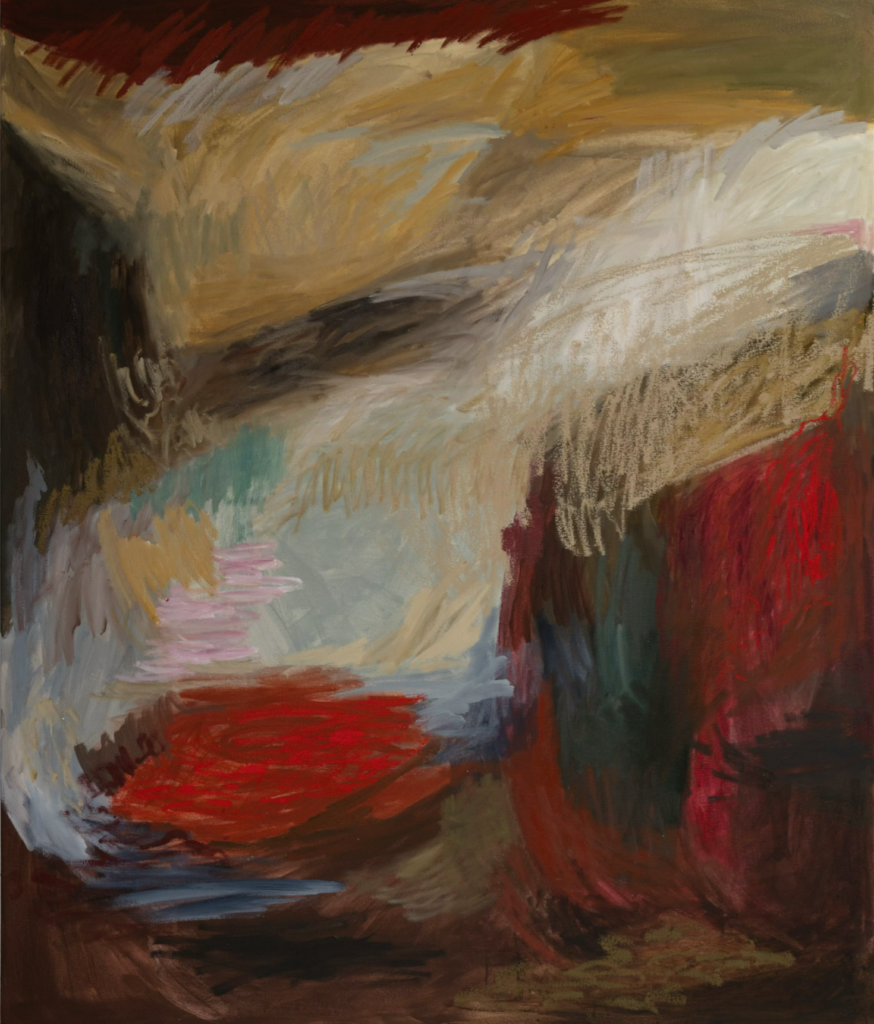
The two routes suit different needs. An auction is a way to find works that already have a previous owner, such as the Latin American artists Morton is showing on 26 November, with the extra cost of the commission. A gallery is a way to meet working artists, ask questions and buy a recent work with the price already known, like Paloma Ulacia‘s 40 Años de Espera above.
If you are on the other side of the table, Morton’s selling page describes a free initial valuation, a consignment contract, cataloguing, a pre-sale exhibition, the sale and a report of the hammer price. If you would like a second opinion before you bid or sell, the gallery’s free art advisory answers questions in English or Spanish. The Stories section carries more guides like this one.
Frequently Asked Questions
Can anyone attend an auction at Morton Subastas?
Yes. Morton’s terms page says the auction is a public, free event, with no invitation needed, and that you can attend even if you are not sure you will buy. To bid you must register first and leave a guarantee deposit.
How much commission does the buyer pay at Morton?
Morton’s buying page says the buyer pays a 25% commission on the hammer price plus the legal IVA. Its terms page states the IVA as 16% and applies it to the commission, so a MX$10,000 hammer price comes to MX$12,900.
Can you bid without going to the auction room?
Yes. Morton lists three ways: an absentee bid with a maximum for each lot, a phone bid, and live online bidding. Phone bids need a written request at least two business days ahead and apply to lots above MX$10,000.
Can you return a lot after winning it?
No. Morton’s terms say that once a lot is awarded there are no returns or cancellations, and that pieces are sold in the condition they are in. That is why the pre-sale exhibition matters.