Buying art you found on Instagram can be safe if you check five things before you pay: who the seller is and how to reach them, the full price with shipping, how you pay, what paperwork comes with the work, and what happens if it arrives damaged. Mexico’s consumer agency, Profeco, and the federal security ministry, SSPC, publish the same basic advice for any purchase made through social networks. This checklist turns that advice into questions a collector can ask about a painting.
Key takeaways
- Before buying online, Profeco recommends checking that the seller lists a physical address, a phone number and a contact email, prices in Mexican pesos and the shipping cost.
- Profeco advises social media buyers not to give in to pressure to make a payment or a deposit quickly; it calls that urgency a warning sign.
- The SSPC recommends payment methods that offer consumer protection against fraud and advises against sending cash, bank transfers or unrecognised payment services.
- A certificate of authenticity is only as credible as the person or gallery that issues it, so ask who signs it and whether they can be reached.
- Ask for dimensions, medium, detail photos and the return or damage policy in writing before you pay, not after.
- Profeco takes consumer complaints on 55 5568 8722 and 800 468 8722.

Who is selling the work, and can you reach them?
Start with the seller, not the picture. An Instagram account can belong to the artist, to a gallery that represents the artist, to a reseller or to someone with no connection to the work at all, and the post itself rarely tells you which. Ask directly: are you the artist, or do you represent the artist, and how can I contact you outside this app?

Profeco’s guidance for online shopping gives a practical test. Before buying, it recommends checking that the seller has a physical address, a phone number and a contact email, shows prices in Mexican pesos with the shipping cost, explains payment, delivery, refunds and cancellations, and publishes a privacy notice. A gallery or an artist with a website should be able to point you to all of that. If the only way to reach a seller is the direct-message box, write that down as a gap and ask for more.
Profeco also suggests comparing what a seller says about a product with reviews other buyers have left in other channels, and the same Profeco release, prepared with Meta, suggests checking the date a selling profile was created. For art, add one more check: does the artist list this seller anywhere, on their own site or their own account? An artist who works with a gallery usually says so.
What does the work cost, including shipping?
A safe purchase has a price you can see before you commit. Ask for the price of the work, the cost of shipping to your address, the currency and whether framing or crating is extra. Get the answer in writing, in the chat or by email, so there is a record of what was agreed.
Ask for the facts that define the object too: the title, the year, the medium, the exact dimensions and whether it is unique or part of an edition. Request extra photos, including a detail of the surface, the signature and the back of the canvas. A photo on a phone screen can change colour and scale, and the dimensions in centimetres are what tell you whether the work fits your wall.
Be careful with an offer that feels too good or too rushed. The SSPC asks buyers to be sceptical of suspicious or excessive offers, and Profeco warns social media buyers not to give in to pressure from selling accounts to pay or leave a deposit quickly. A real seller of an original work can usually hold it for a short time while you ask questions.
How should you pay for art found online?
The SSPC’s recommendations for transactions on social networks are direct: use payment methods that offer consumer protection in case of fraud, and avoid sending cash, bank transfers or payment services you do not recognise. Profeco adds that a temporary digital card is a useful option for online purchases.
In practice, that means paying through a checkout or payment service that lets you dispute a charge, rather than sending money to a personal account because someone asked in a message. If a seller offers a payment plan or asks for a deposit to reserve a work, ask for the terms in writing: the total, the amount of each payment, the dates and what happens to the deposit if the sale does not go ahead.
Check the payment page itself before you type a card number. Profeco recommends confirming that the address starts with https and that the browser shows a closed padlock. Keep the receipt, the order confirmation and screenshots of the conversation together in one place.
- Confirm who the seller is and how to reach them outside the app.
- Get the price, shipping cost and currency in writing.
- Ask for dimensions, medium, year, edition and detail photos.
- Pay with a method that lets you dispute a charge.
- Ask who signs the certificate of authenticity.
- Ask, in writing, what happens if the work arrives damaged.
What paperwork should come with the work?
For an original work of art, the key document is the certificate of authenticity. Our guide to what a certificate of authenticity means for collectors explains why the issuer matters more than the paper: a certificate from the artist or the gallery that represents them carries weight, and one from a reseller with no relationship to the artist carries far less. The question to ask is who signs it and whether that person can be reached.
A useful certificate names the artist and identifies the work precisely: title, year, medium, dimensions and, for an edition, the edition number and the total size of the edition. Ask for an invoice too, with the seller’s name, the date, the work and the price paid. Kept together, the certificate and the invoice start the work’s provenance, its documented history of ownership.
If the work has to cross a border, ask how it will be declared. Our guide to buying art from abroad covers what to expect with shipping and import duties, so you can ask the seller the right questions before you pay.
What happens if the work arrives damaged?
Ask how the work will be packed, whether the shipment is insured and who handles a claim, before you pay. Our guide to shipping and insuring original art across borders explains what good packing and insurance look like, and it gives you a standard to compare a seller’s answer against.
Ask for the return policy in writing as well. Many sellers of unique works do not accept general returns, which is reasonable for a one-of-a-kind object, but there should still be a clear answer for a work that arrives damaged or is not what you ordered. When the parcel arrives, photograph the packaging and the work before you throw anything away, and contact the seller the same day.
If something goes wrong with a seller in Mexico and you cannot resolve it, Profeco receives complaints through its consumer phone line, 55 5568 8722 and 800 468 8722, and the SSPC asks people to report suspicious activity to the authorities. Keep the post, the conversation and the receipt, as they are your evidence.
How we handle Instagram enquiries at Art of NOMA
We are a contemporary gallery in Mexico City representing around forty living artists, and many people find us first on Instagram as @artofnoma. Our Shop Instagram page exists so that every work you see in a post can be found on our site with its price on it: no “price on request” and no DM required. If a work is hard to find, send us the post by email at hello@artofnoma.com or by direct message, and a person replies with the link, the price and the dimensions.
Our FAQ answers the checklist questions in writing. Every work ships with a certificate of authenticity signed by the artist, and we work directly with the artists rather than through resellers. Shipping is priced by the size of the work, fully insured and packed by hand in Mexico City. We do not accept general returns because each work is unique, but if a work arrives damaged or is not what you ordered, we ask you to contact us the same day with photos and we resolve it with a refund or replacement, case by case. Payment is by credit or debit card, PayPal, Shop Pay, Apple Pay or Google Pay, and we do not run discount codes. If you are in Mexico City, you can see a work in person by appointment.
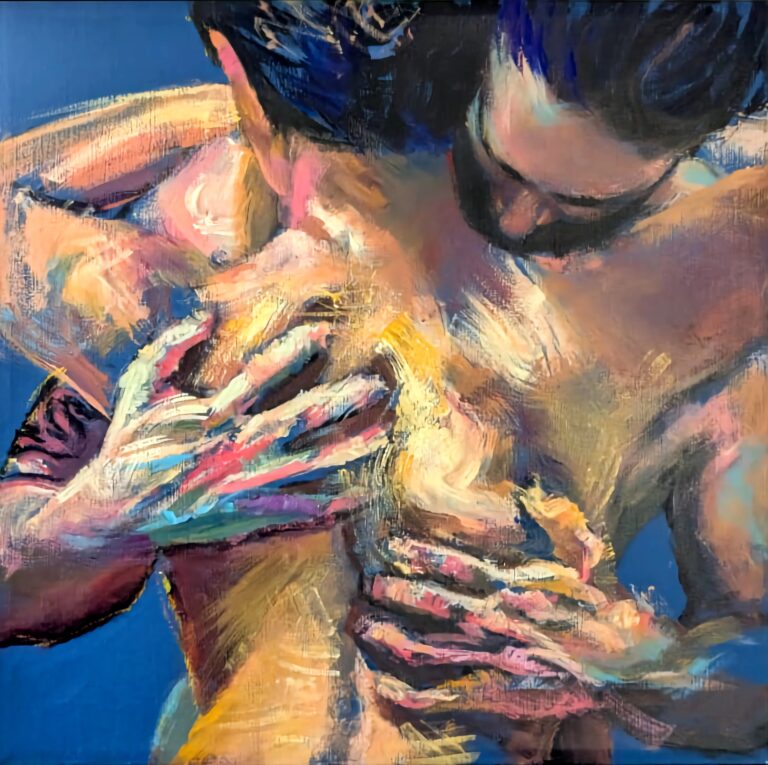
The lowest price on our live catalogue today is MX$ 2,330, shown for a limited-edition print; prices change, so check each work page. The painting above, Open The Door 1, is by Jorge Tellaeche, born in Mexico City in 1982, who works in acrylic and watercolour on series such as Perdiendo la forma and Open the Door. If you want a second opinion before you commit to any work, ours or anyone else’s, our complimentary art advisory is there for that, and our guide to buying original art online covers the rest of the process. If you are buying in person instead, our guide to buying art at an art fair lists the questions to ask at a stand.
Verified 28 October 2026 against Profeco’s online shopping recommendations (30 November 2024 and 3 May 2025), the SSPC’s recommendations for safe transactions on social networks (2 December 2024), and our own FAQ, Shop Instagram page and the live listing of the work shown.
Frequently Asked Questions
Is it safe to buy art on Instagram?
It can be, if you confirm who the seller is and how to reach them outside the app, get the price and shipping in writing, pay with a method that lets you dispute a charge, and ask who signs the certificate of authenticity.
What should I ask an artist or gallery before I pay?
Ask for the full price with shipping and currency, the title, year, medium, dimensions and edition, detail photos, who signs the certificate of authenticity, and what happens if the work arrives damaged.
How should I pay for a work I found on social media?
Mexico’s SSPC recommends payment methods with consumer protection against fraud and advises against cash, bank transfers or unrecognised payment services. Profeco suggests a temporary digital card for online purchases.
Where can I complain about an online purchase in Mexico?
Profeco receives consumer complaints on 55 5568 8722 and 800 468 8722. Keep the post, the conversation and the receipt as evidence.
Sources
- Hace Profeco recomendaciones para compras seguras en Cyber Monday, Profeco (30 November 2024)
- ¿Compra de regalo para mamá en línea? Profeco emite recomendaciones para hacerlo de forma segura, Profeco (3 May 2025)
- SSPC emite recomendaciones para realizar transacciones seguras en redes sociales, SSPC (2 December 2024)
- Frequently Asked Questions, Art of NOMA
- Shop Instagram, Art of NOMA